
ONLINE COURSES
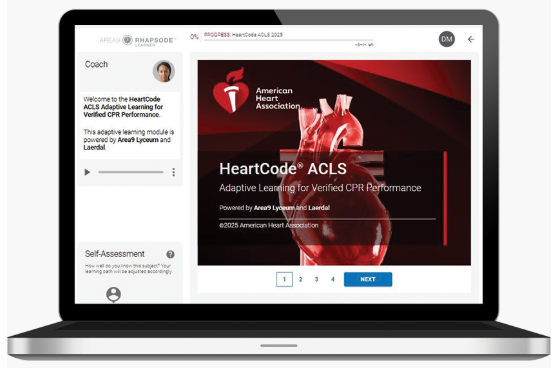
ACLS HeartCode Online and Skills Testing
To get an ACLS certification with online and skills testing, you must complete a blended learning program, which includes an online cognitive portion followed by a hands-on skills testing session. You can take the online course at your own pace, but you must complete a separate in-person or virtual skills session to demonstrate proficiency in life support techniques. This blended approach is offered by organizations like the American Heart Association (AHA), which offers the HeartCode ACLS online course, and results in the same two-year certification as a traditional, in-person course.
Step 1: Complete the online cognitive portion
- Take the online course through an accredited provider, like the AHA’s HeartCode ACLS or a similar program.
- This portion covers the theoretical knowledge and skills needed for ACLS.
- The time to complete varies depending on your experience level.
- Upon passing the online course, you will receive a certificate granting you access to the skills testing session.
- You must schedule a separate, hands-on skills testing session after finishing the online course.
- This can be done with an AHA instructor in person.
- The skills test involves demonstrating your ability to perform key ACLS techniques.
- You will need to bring your online course completion certificate to the skills session.
- After successfully completing both the online and skills testing portions, you will receive a two-year AHA ACLS Provider eCard.
- This certification is the same as one obtained through a fully in-person course.

BLS for Healthcare Provider Online and Skills Testing
To get your BLS for Healthcare Provider certification, you must complete both an online cognitive portion and a hands-on skills testing session. The online course, like the American Heart Association’s HeartCode BLS, covers theoretical knowledge like CPR guidelines, and after completion, you must schedule an in-person or virtual session to demonstrate practical skills to an instructor. Successful completion of both parts results in a two-year certification card.
- What it is: A self-paced, web-based course that uses videos, interactive activities, and scenarios to teach BLS knowledge.
- Content: Topics include single-rescuer and team-based BLS, high-quality CPR, the Chain of Survival, and the use of automated external defibrillators (AEDs).
- Adaptive learning: Some programs, like AHA’s HeartCode BLS, use adaptive technology to tailor the learning path based on your performance.
- Completion: After finishing the online portion, you will receive a certificate to bring to your skills session.
- What it is: A hands-on session with a certified instructor to practice and get tested on practical BLS skills.
- How to do it: You must schedule this in-person session separately after completing the online part.
- Skills tested: This session includes demonstrating skills on adult and infant manikins, such as chest compressions and bag-valve mask use.
- After you successfully complete both the online and in-person skills parts, you will receive your BLS Provider course completion card.
- This certification is typically valid for two years.
Heartsaver CPR & AED Online and Skills Testing
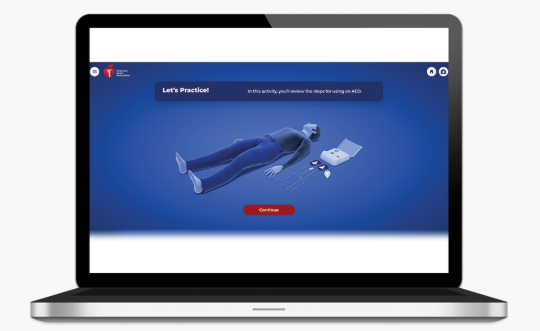
The American Heart Association (AHA) offers a blended learning option for “Heartsaver CPR/AED” that requires both an online portion and a hands-on skills testing session. This hybrid format, often called “Heartsaver® Online with Skills Testing,” is designed for individuals needing a course completion eCard for their job or other requirements. The online portion includes interactive modules on topics like CPR, AED use, and choking for adults, children, and infants, while the skills test is conducted with an instructor to ensure hands-on competency.
- Online Part 1: You will complete an online course that covers the theoretical knowledge and includes interactive videos and knowledge checks.
- Hands-on Skills Testing: After finishing the online portion, you will schedule a hands-on skills session with an AHA instructor to practice and demonstrate the skills you’ve learned, such as performing high-quality CPR and using an AED.
- Course Completion Card: Upon successful completion of both the online and skills testing portions, you will receive an AHA Heartsaver eCard, which is valid for two years.
- The Heartsaver certification is for anyone with little or no medical training who needs a completion card.
- This is often a requirement for employment or regulatory purposes.
- It can also be taken by anyone who wants to be prepared for an emergency in any setting.
- CPR: Performing high-quality CPR on adults, children, and infants.
- AED: How to use an automated external defibrillator on an adult and a child.
- Choking: How to help a choking adult, child, or infant.
Heartsaver First Aid with CPR & AED Online and Skills Testing
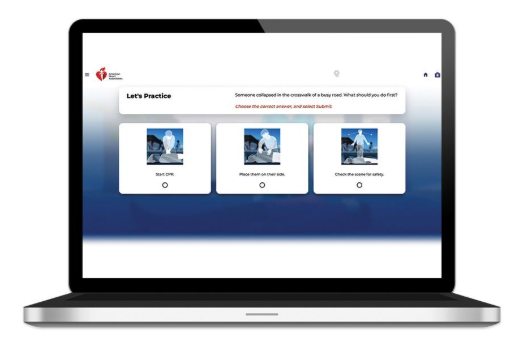
The Heartsaver CPR/AED and First Aid for Healthcare Providers Online and Skills Testing is a two-part certification program that combines online learning with a hands-on skills test. It includes online modules covering CPR, AED, and first aid basics, followed by an in-person skills session with an instructor to demonstrate practical skills, such as chest compressions and using an AED. Upon successful completion of both parts, participants receive a two-year completion card.
- Part 1: Online Portion: A self-paced online module covering the cognitive aspects of the course, including adult, child, and infant CPR; AED use; choking emergencies; and basic first aid. Some versions may include a written exam within this part.
- Part 2: Skills Testing: An in-person session with an American Heart Association (AHA) instructor for hands-on skills practice and testing.
- Part 3: Completion: After successfully completing both the online and hands-on parts, you will receive a two-year course completion card.
- Adult, child, and infant CPR
- Automated External Defibrillator (AED) use
- Adult, child, and infant choking
- Basic first aid, including medical and injury emergencies
- Scene safety and assessment
- How to call for help and perform lifesaving skills
- Flexible: The online portion allows you to learn at your own pace.
- Certification: Successful completion earns a two-year certification card.
- Practical: The hands-on skills test ensures you can perform life-saving procedures correctly.
- Job-related: Designed for anyone needing certification for job requirements or simply wanting to be prepared for an emergency.
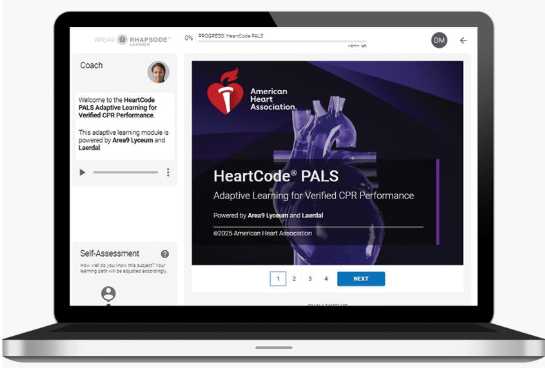
PALS HeartCode Online and Skills Testing
PALS (Pediatric Advanced Life Support) for healthcare providers is offered through a blended learning format that combines an online cognitive portion with an in-person or virtual skills testing session. After completing the online modules and passing the cognitive exam, you must attend a skills session to practice and demonstrate PALS skills, such as CPR and emergency management, with a certified instructor to receive your official PALS provider card.
- What it is: A self-paced, online course that covers the knowledge base for PALS.
- What you do: Complete online modules, interactive scenarios, and a cognitive final exam.
- Adaptive technology: Some programs use adaptive technology, which adjusts the course content based on your current knowledge level, potentially shortening the time needed.
- Certification of completion: You will receive a certificate of completion for the online portion, which you must print and bring to your skills testing session.
- What it is: A hands-on assessment of your PALS skills.
- What you do: Demonstrate skills like high-quality child and infant CPR, AED use, and respiratory and circulatory emergency management.
- Format: This can be a traditional in-person session with an instructor, a virtual instructor-guided session, or a self-guided station with feedback, depending on the provider.
- What you need: You must present your certificate of completion from the online portion to be admitted to the skills test.